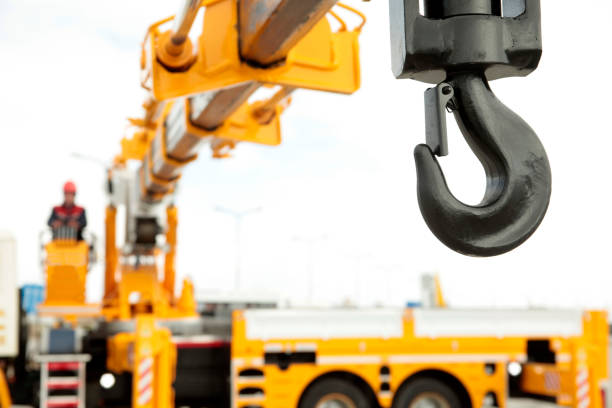
Modern construction and infrastructure developments depend on high-capacity mobile lifting equipment capable of maneuvering through restricted work environments while lifting substantial structural components. From urban building sites bounded by live traffic lanes to expansive wind farm developments and industrial facilities, mobile cranes provide the versatility, hydraulic strength, and operational outreach needed to execute heavy lifts efficiently.
Understanding fleet breakdowns, tonnage classifications, advanced rigging features, and supporting plant equipment enables project planners to select the optimal machinery for their unique lifting profiles.
Breakdown of the Modern Mobile Crane Fleet
Mobile crane hire Lincoln fleets are built around multi-axle all-terrain chassis that combine highway transit capabilities with off-road mobility. Equipped with all-wheel steering, independent suspension systems, and multi-stage telescopic booms, these machines can reach distant job sites rapidly and navigate constrained access roads with ease.
Fleet capabilities are broadly categorized across several tonnage brackets, each tailored to specific engineering roles:
Compact All-Terrain Cranes (30 to 60 Tonne Capacity)
Featuring compact footprints, short overall transport lengths, and highly agile steering configurations, 30 to 60-tonne units are the primary choice for urban construction and light civil engineering. They excel at rapidly deploying on tight residential job sites or enclosed industrial yards. Typical applications include placing rooftop HVAC